



BY RUSSELL WALSH
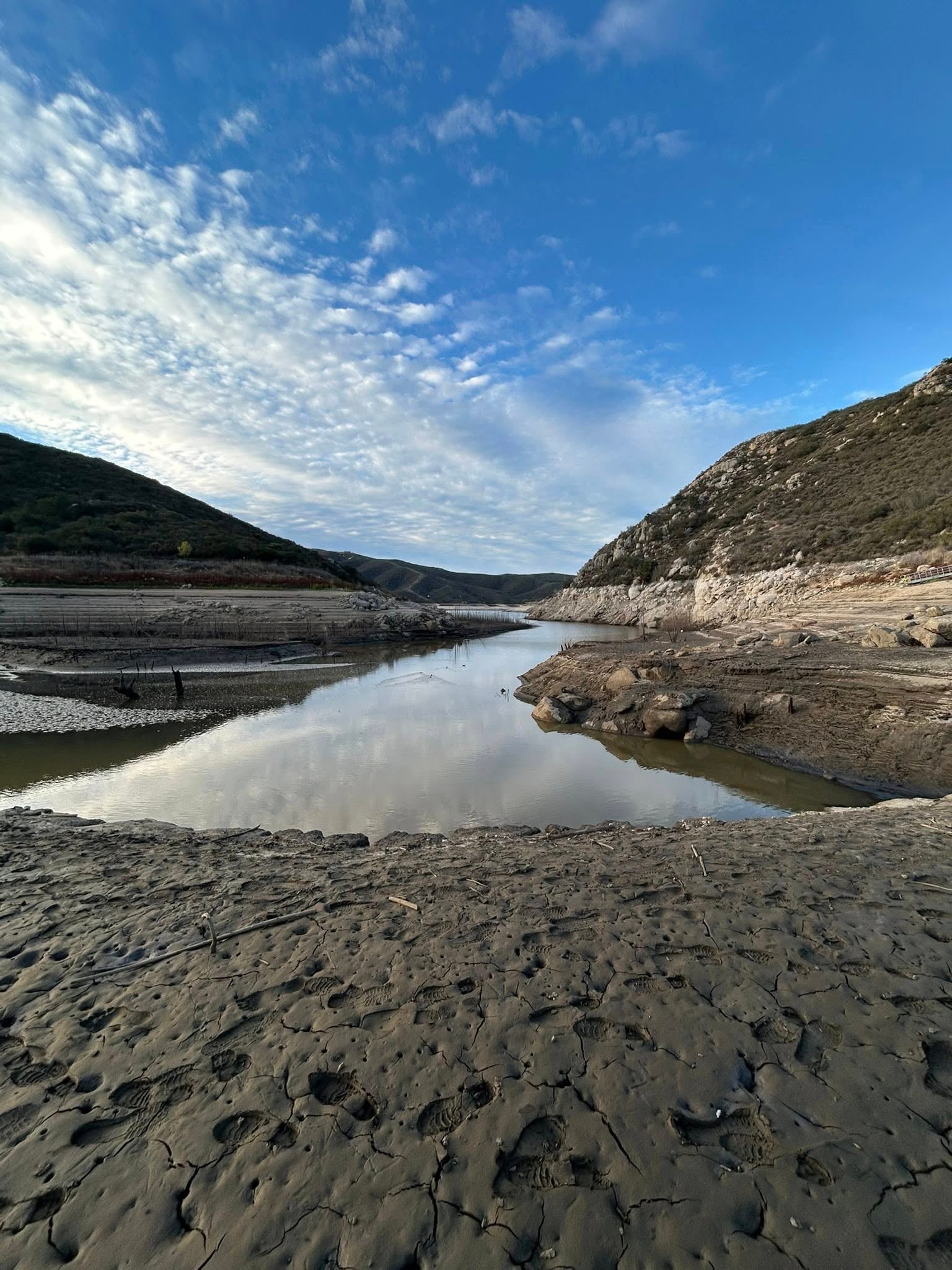
SAN DIEGO — As of December 3, 2025, Loveland Reservoir, in the rural part of East San Diego County sits precariously at about 33 percent capacity. The ongoing water transfer by Sweetwater Authority has placed the treasured public fishing program—secured through a historic land swap with the US Forest Service—in immediate and serious jeopardy.
With the intention of leaving the reservoir at roughly 25 percent full after a few more days, Sweetwater is effectively undermining the Forest Service easement for public fishing on 1,550 acres of federal land surrounding Loveland Reservoir. This vast area was gained for public recreational use under agreements that hinged on maintaining adequate water levels to support a thriving fishing program. Setting the pool at such a low level is a bait-and-switch: a sharp departure from the 35 percent or higher capacity that would enable a functional fishery and honor the original promises made during the land swap.
Moreover, the roughly 10 percent difference between 25 and 35 percent full is trivial. A significant portion of that water will evaporate or be absorbed during transit and storage at Sweetwater Reservoir downstream, meaning the real available volume for customers and the environment is not being used in a balanced way. This mismatch leaves the public’s access to a recovering fishery severely compromised, while the Authority has very modest water savings at the expense of rural outdoor heritage and ecological functions.

The extinguishing of the legally protected Forest Service fishing program near the dam adds insult to injury. The program was created and documented with easements ensuring sustained recreational fishing. A previous protected program near the dam was extinguished in that agreement. Now, with low reservoir levels and ongoing transfers, both the spirit and letter of that agreement have been broken. The 1,550 acres of Forest Service land obtained should be returned, or at minimum, the fishing program be returned and open to the public from sunrise to sunset per the Forest Service easement. This bait and switch puts the onus on Congress members and Forest Service officials who appear to have abandoned their constituents and rural communities. The integrity of the land swap and commitment to free public fishing must be defended before this vital community resource disappears altogether.
Anglers, outdoor advocates and local residents deserve transparency, enforcement of legal easements, and water management decisions that value recreation alongside urban supply. Until then, Loveland Reservoir’s shrinking waters symbolize a deeper failure to balance nature, community, and resource stewardship.
