



BY ERNIE COWAN
JUNE LAKE— While most Sierra anglers prefer fishing in bluebird weather, Mike Fluke is happiest when it’s snowing.
This avid trout hunter spends more than 30 day each year working the prime fall waters of the Eastern Sierra, and the worse the weather, the happier he is.
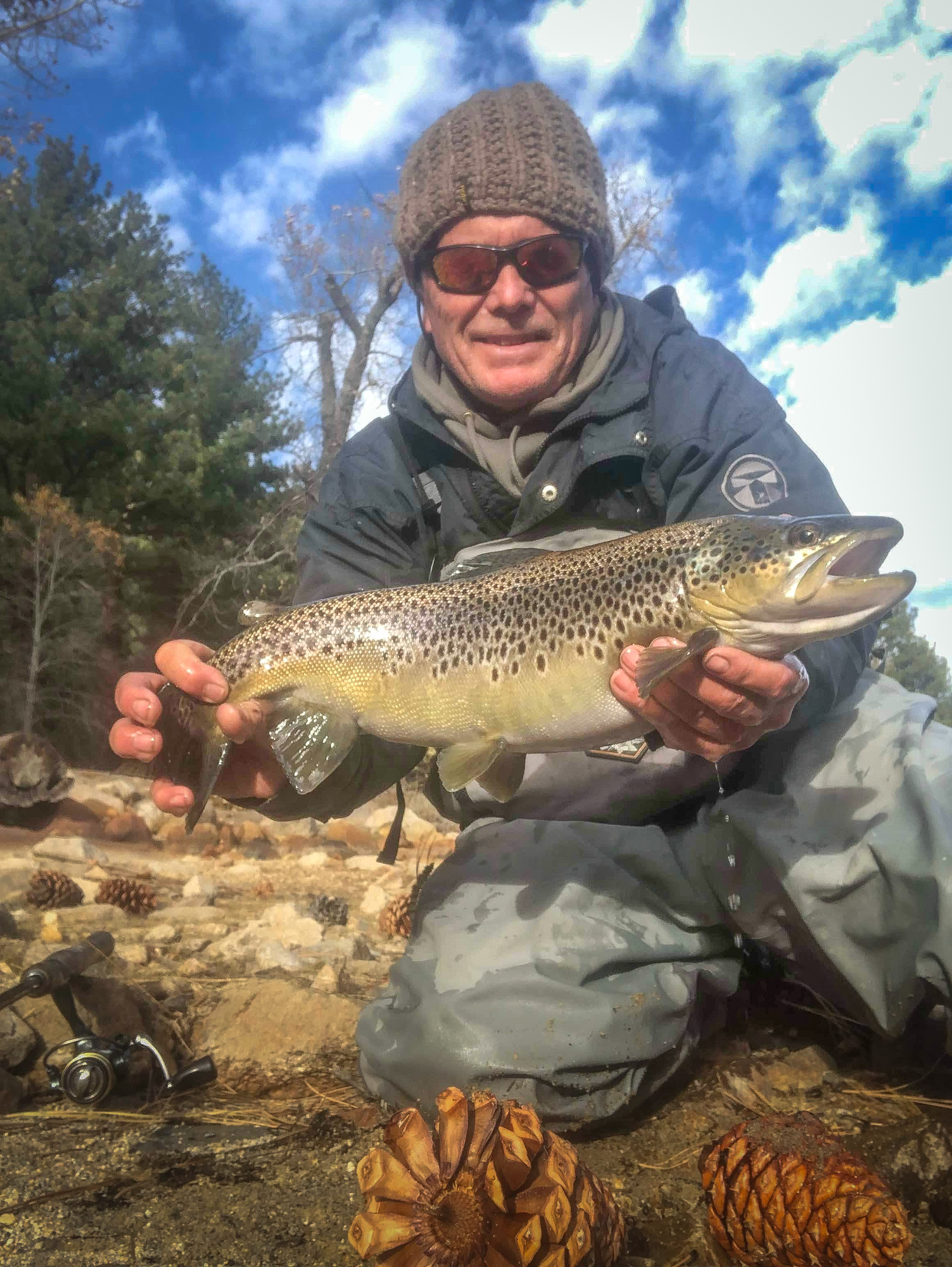
Fluke, a commercial fisherman by trade who lives in Agua Dulce, is one of those special breeds of anglers known as Brown Baggers. These dedicated anglers are hyper-focused on gear and techniques. Specifically for brown trout with high hopes of breaking the current 26.8-pound record from Upper Twin Lake in Bridgeport.

Fluke is passionate and singularly focused on catching browns, and as any Sierra veteran will tell you, that means fall or winter fishing. It’s a passion he’s had for 40 years, but it became an obsession about five years ago after landing a personal best, 11.4 brown at Walker Lake.
“I’ve hooked a few bigger ones in the last few years, but they won. I’m just happy to be hooking them,” he said.
His goal is to catch a larger brown each season, and he knows they are out there.
“I’ve seen schools of 10-pound-plus browns at Upper Twin Lake, and my trips now focus between there, Walker Lake or Grant, Lake,” he said.
His passion means he has learned a lot about browns, and “honestly, I am surprised to catch a rainbow,” he said.
He paints his own lures, staying away from typical patterns that resemble fish.
“I pretty much only fish lures that I paint, other than a few rubber jigs,” he said. “I catch more fish on lures that don’t look like fish.”
He calls his technique “fire tiger designs,” which feature contrasting colors, circles, and lines that don’t look anything like a fish.
His custom lures are five to six inches long and they are thin and none are the same.
Many Brown Baggers are very secretive about the lures they make and use.
Not Fluke.
“I don’t mind sharing and I don’t have any secrets,” he said.
A popular technique for brown trout hunters in sight fishing, a method that involves slowly moving around and looking for the monster fish feeding close to the surface.
“I have read the water so long, I know where the fish are. I’m not much for sight fishing, just working the areas I know,” he said.
Fluke’s method comes from his knowledge gained after years of fall fishing.
“I’ve learned where the browns are and I know bigger fish come into shallower water when it gets cold,” he said.
He prefers larger lures.
“I like to go big, maybe 4.5 to 12 inches and the more water you cover and the more you cast, you are going to catch more fish,” he said.
The larger lures cast farther and that means more retrieval time. Makes sense.
While fall fishing is a passion for many Eastern Sierra anglers, Fluke might be considered the extreme trout hunter since he always tent camps, often in weather he describes as “gnarly.”
“I like being cold and I just love the snow, and the fall aspen colors,” he said.
People who follow some of the Eastern Sierra fishing social media pages might recall photos of Fluke with impressive brown and swirling snow.
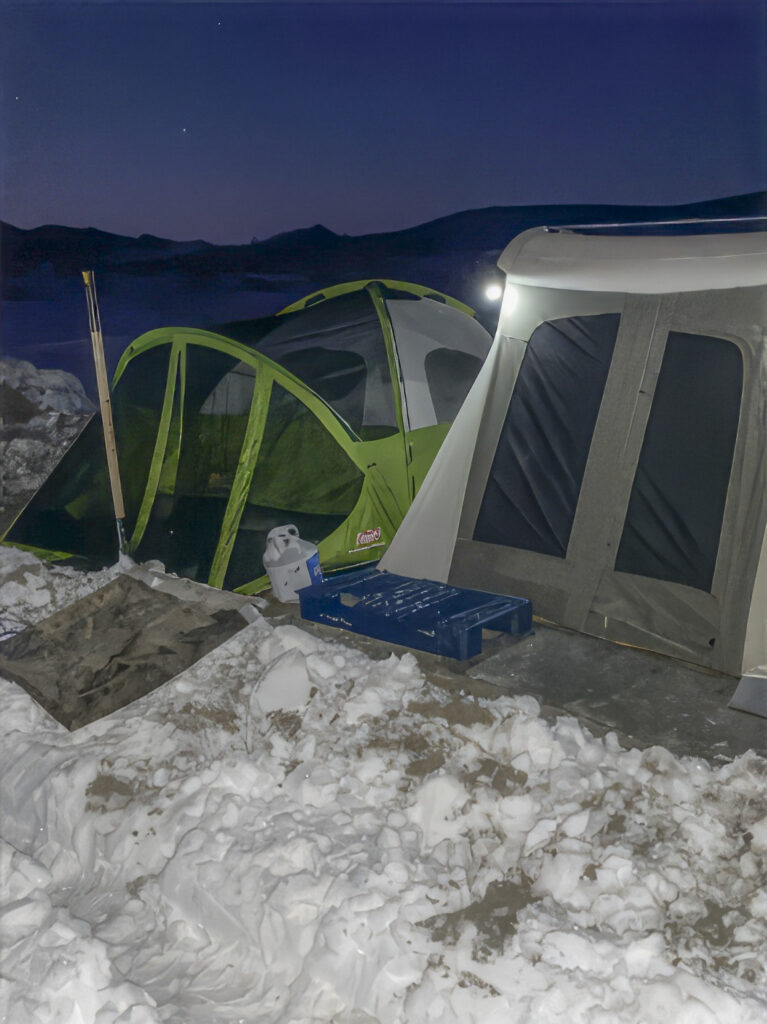
“I like cold-weather fishing, because fish are generally more active, not as many people fishing late season or winter season. I love the fall color and the snow and seeing all the tracks and learning where animals live,” he said.
Even though Fluke is tent camping, he’s not roughing it.
He has a 10×14 winter Kodiak Tent with a stove inside, and he enjoys the solitude his camp offers.
“I often have the place all to myself, no crowds and some nice fish to catch,” he said.
He admits conditions can get brutal sometimes. On a visit to the Upper Owens, he ran into guide “Two Bug” Doug Dolan who said recent morning temperatures on the river were between -10 and -15 degrees.
But for Fluke, the rewards of cold-weather trout fishing far outweigh any challenges.
“If you like solitude, no crowds and some nice fish, go do it,” he said.
Winter anglers over the past few weeks have enjoyed a period of now storms. Temperatures, but they were not accompanied with any snow. That could change quickly, however as weather patterns are showing increasing chances of precipitation this month.
The Wild Trout Section of the Lower Owens has been both productive and pleasant for winter anglers, but since this area has gotten the most pressure, things have slowed somewhat. Mornings are chilly, but midday temperatures and the bite warm up starting around 10 a.m.
Sierra Bright Dot guide Fred Rowe said nymphing with an indicator or a Euro rod has been the most effective method of fly fishing currently.
“The key to success is having the right amount of weight in your flies or as split shot on your tippet. With flows hovering around 100 CFS it is easy to wade the river right now except for those holes that are deeper than you are tall,” he said.
The Lower Owens, between Big Pine and Lone has been producing up to 20-fish days for bait anglers, although jigs and Rapalas are seeing some action.
Brian Stevens, brother of WON Editor Mike Stevens did well down there, including connecting with nice brown using a Sierra Slammer Miniswim.
Hot Creek is still a walk-in destination as lingering snow has kept access roads closed.
Guides are reporting the trout are taking nymphs and dries. Midges and mayflies are the insects they are keying in on.
Even with no storms, it’s bitter cold on the Upper Owens and there is still snow, making access limited to snowmobile or hiking. At press time, anglers could drive north of Benton crossing with 4-wheel drive a short distance, but new storms could change that quickly.
The big Crowley snowbows are still holding in the Upper Owens. Look for them in deeper holes, runs and under the cut banks.
Bitter cold conditions have kept many anglers off the Nevada side of the East Walker River. The California side is close to winter fishing.
Jim Reid at Ken’s Sporting Goods said flows have bumped up to help prevent anchor ice from forming on the river bottom.
“This is strictly for the good health of the fish and when things start to warm up and we see some angling traffic down there, we’ll pass it on to you,” Reid said.