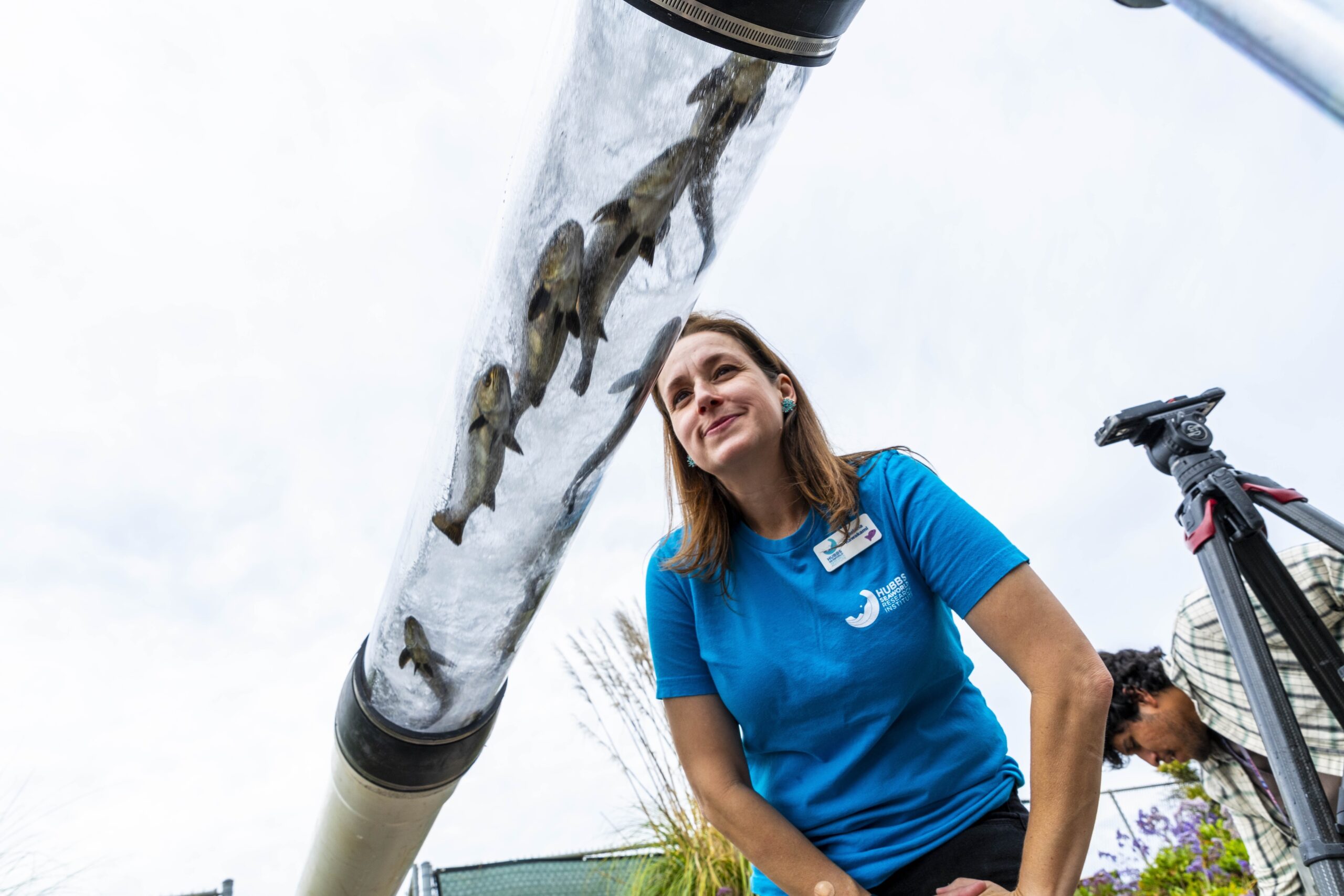
YOUNG SEABASS IN THE CHUTE on their way to freedom in the wild. These hatchery raised stockers were part of the batch that included the CDFW Ocean Resources Enhancement and Hatchery Program’s 3 millionth fish successfully spawned at Hubbs Sea World Research Institute’s hatchery facility in Carlsbad and reared to release. PHOTO COURTESY OF MIKE SHANE AT HSWRI
Advertisement
BY MERIT MCRAE
SAN CLEMENTE – Hubbs-SeaWorld Research Institute posted April 2nd“Today, we’re proud to celebrate the release of our 3 millionth tagged white seabass, a powerful moment in decades of dedication to rebuilding this iconic species. Through innovative aquaculture and fisheries enhancement, HSWRI scientists have raised and released juvenile white seabass to support wild populations and strengthen the future of sustainable fisheries. Each fish carries a tiny coded-wire tag, helping researchers track survival, movement, and the long-term impact of this work in the wild. This milestone is a testament to the science, collaboration, and commitment driving healthier marine ecosystems for generations to come.”
This is just one of many outstanding achievements of the efforts your Ocean Enhancement Stamp funds. In addition they bring Seabass in the Classroom which introduces students to the project, science, provides hands-on fish culture experience and fosters a first connection to the ocean.
But most importantly it’s funded the science supporting ocean stocking of the fish that are important to anglers and commercial fisheries too.
Advertisement
The HSWRI representatives Mike Shane, Mark Drawbridge and Rauri MacNamara presented some scientific research updates at last weeks meeting of the Ocean Resources Enhancement Advisory Panel in Seal Beach.
Hubbs will deliver and volunteers will grow out over 50 thousand baby white seabass this year. Active grow-out sites included the Ocean Institute, the Southwestern Yacht Club in San Diego, Marina Del Rey Anglers, King Harbor, and Newport as well as from Catalina Island and from the hatchery at Carlsbad.
They have 92 breeders currently and collected 12 of them from the wild at Catalina Island last year. However, 3 of these were hatchery-grown fish and not included in the breeding program. That represents a 25% contribution to the Catalina cohort! Dr. MacNamara noted that when they sample the juvenile population at the island the fraction that have coded wire tags from the hatchery can be 50, even 60%.
Hubbs is testing the effect of moving baby seabass to pens out in the lagoon at the hatchery to acclimate pre-release, compared releasing them at the same size/age directly from the hatchery on survival.
The Department of Fish and Wildlife got grant funding for developing a method to identify hatchery fish using genetic markers in addition to the current coded wire tag method. The Genetics contractor has so far found the genetic markers (SNPs) in the white seabass genome to be used assess parentage.
The are also conducting an experiment to find ways to keep babies from running into, or picking food from the walls of the tanks, which can damage the fish’s faces.