



BY MIKE STEVENS
Two questions: What is it about trout guy sticking with what’s worked for decades while bass guy is always chasing the hype train for the next “gamechanger,” and what was it about the 1950s that produced so many trout lures that are still top producers decades later?
How is it that a trout guy can kill it for a week in the Sierra with nothing but a box of 75-year-old lures while a bass guy might panic because the tackle shop is out of the red flake version of the green pumpkin whatever bait because it’s apparently what the bass want this week?
Here are some that are still very much in the modern rotation and when they were born: Kastmaster (1952), Panther Martin (1958), Rooster Tail (1950s, unsure of exact year), Super Duper (early 1950s), Mepps (introduced in U.S. in 1951) and Rapala (introduced in U.S. in 1959).
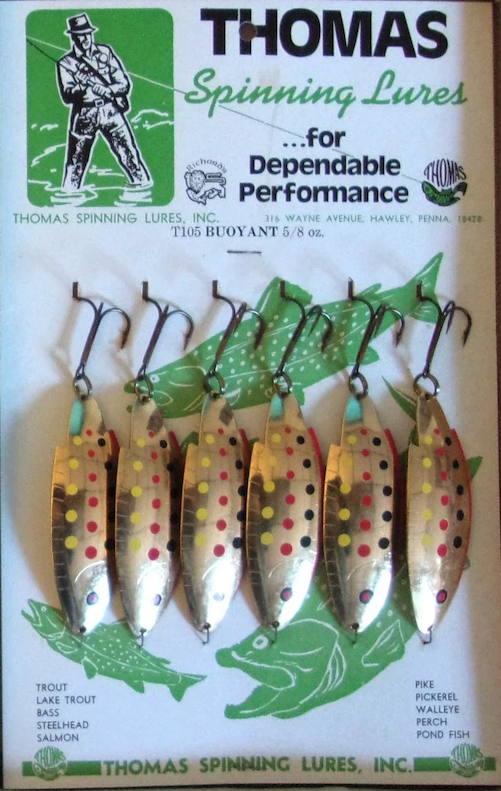
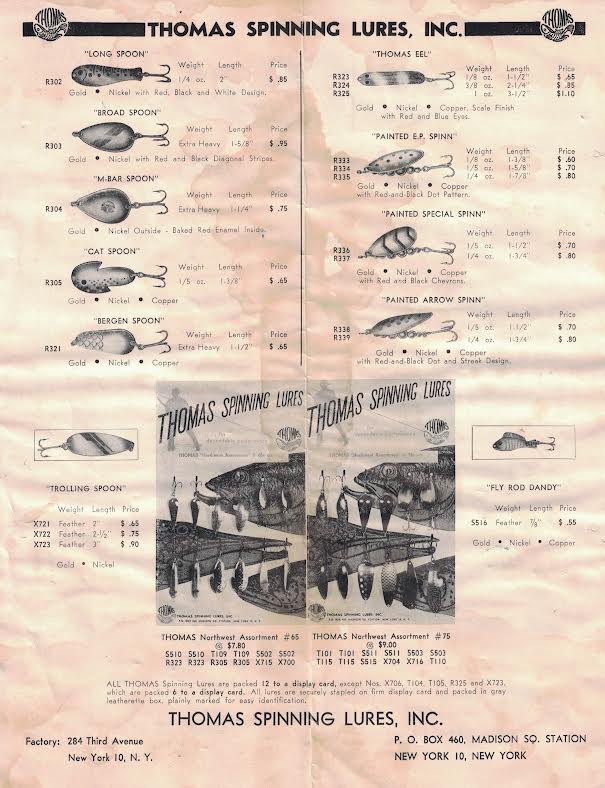
Al’s Goldfish and Hoffman Lures (couple under-the-radar ones I keep in my kit) both hit the market in 1951, and since you’re probably wondering where the greatest lure in the history of the Eastern Sierra is among these heavy hitters, the Thomas Buoyant scooped them all when it was first issued a U.S. patent in 1946.
The famous Dardevle spoon? Fuhgeddaboudit. Invented by Lou Eppinger in 1906. Great grandpa status
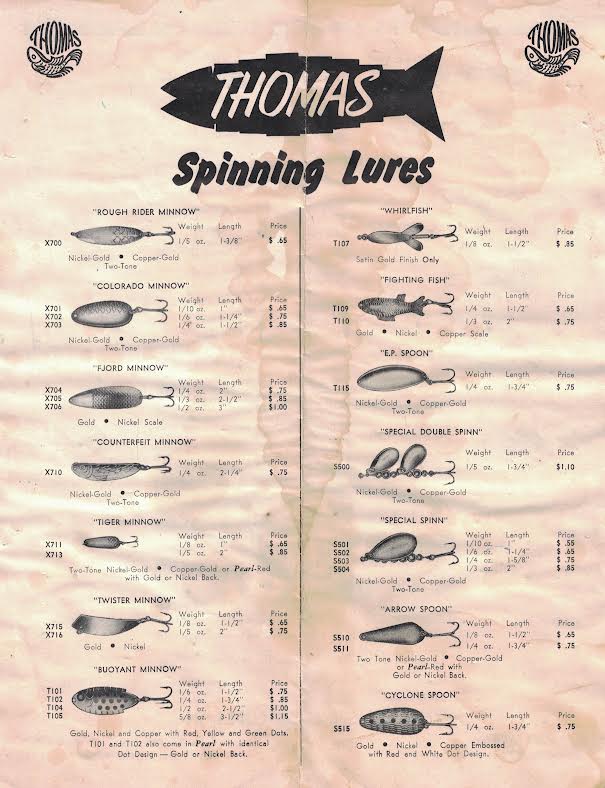
It’s really not hard to put a finger on that era becoming the Golden Age of U.S.-made (other than the Rapala, which was included for a fun fact I’ll get into later, and Panther Martins that were orginally from Italy) trout lures that not only are still widely available, but also shrug off any newcoming competition. That’s because it was happening in countless domestic industries in the wake of World War II.
At this time, manufacturing capabilities and technological advancements were peaking, and that paired with the spike in outdoor recreation resulted in the fishing tackle industry, like so many others, blowing up. GI’s came home to steady jobs which meant more disposable income that could be spent on this elevated appreciation for outdoor recreation, while a robust interstate highway system and a boom in car culture meant road trips became a favorite American pastime.
And the stuff we made was good. A humming example of this is that garage fridge at your parents’ house that’s lasted longer than the last three in your kitchen combined.
Invented in Europe in the early 1900s, spinning reels were showing up in small numbers prior to The Great War but they become mainstream in its wake. And that also helped contribute to the perfect storm that lead to gobs of U.S.-made casting lures flooding the market.
Mepps are French, but included here with the rest because they’ve very much stood the test of time, and for good measure, they were originally brought here by Frank Valek, an American GI returning from the war in 1951.
As for our Rapalas, what a story they have. Lauri Rapala whittled the first one in Finland in 1936. They first reached the U.S. via Finnish immigrants, but they really didn’t take off until 1962 when they won the magazine-ad lottery. A modest feature story on Rapalas appeared in the August 17, 1962 issue of Life Magazine which also included a tribute to Marilyn Monroe who had recently passed away. That became Life’s all-time best-selling issue, and all those extra eyeballs saw the Rapala story causing orders (and backorders, for that matter) to surge to well over 3 million.
These days, just by paying attention to anything from marketing to social-media hype to people just fishing, the bass side of the coin is this revolving door of alleged “game changers,” some of which hit (urchin baits) while others end up in bargain bins within a year of being unveiled at the annual ICAST Show.
At ICAST, bass stuff accounts for the majority of the freshwater lures on the convention center floor, and I’ve seen everything from crankbaits that connect to your phone via Bluetooth and you can choose from dozens of lifelike sounds for it to ….emit, to topwater baits that look like baby alligators.
Meanwhile, reps for legacy trout brands just chill in their non-flashy booths with lures that sell themselves, and maybe (if they’re feeling really crazy) you might get a new color or a red hook.
Honestly, what was the last trout fishing GAME CHANGER?
Mike Stevens is the Managing Editor of Western Outdoor News. His path to WON included full-time employment in tackle shops, a marine fish hatchery and at a digital marketing agency representing legacy outdoor brands. He refers to himself a “rare Sierra/saltwater hybrid” when asked what type of fishing he digs the most, and he’s become more conservation-minded over the last decade with active memberships to CCA-Cal, Backcountry Hunters and Anglers and TRCP. Stevens is also a sports fan, and he lives in San Marcos with his wife and three kids. Argue with him at mike@wonews.com
