




BY MIKE STEVENS
BISHOP – Years ago at the annual Fishmas Eve media event in Bishop, the late and legendary WON Sierra columnist, Martin Strelneck told me “80 percent of the anglers up here are using PowerBait.” I had never given it much thought, but in the years that followed in my Sierra wanderings, I kept it in mind and casually kept track, and I’d say 80 percent is pretty much spot on.
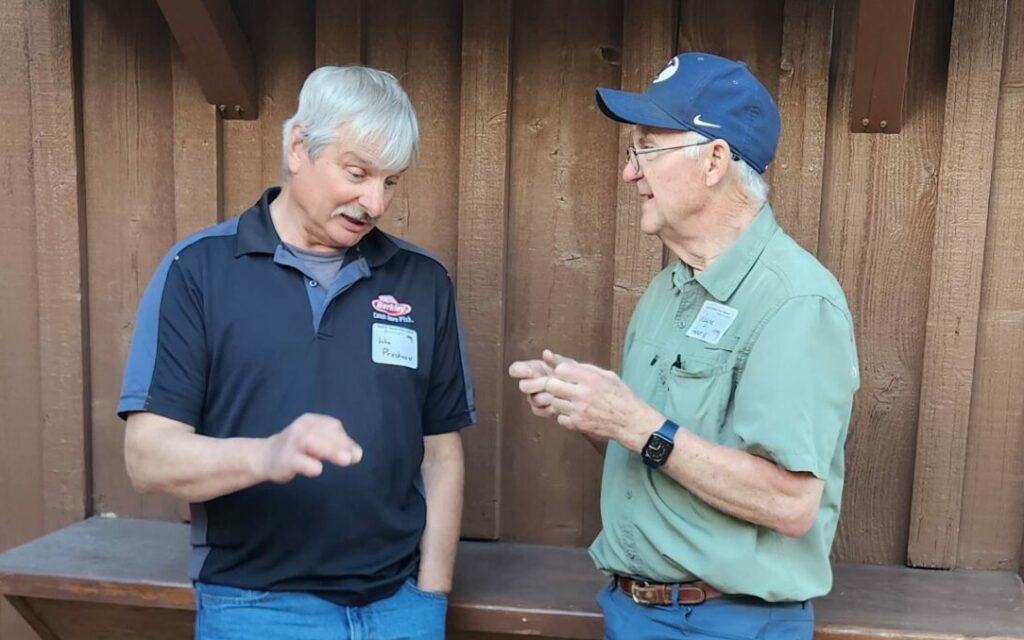
Fast forward to last year at the same, I had the pleasure of chatting with the inventor of PowerBait, Dr. John Prochnow, who was in attendance as part of the Berkley team that always has a strong Sierra Opener presence. The conversation was pretty fascinating, and the part I found the coolest was something I had never heard: PowerBait has strong roots in the Eastern Sierra from the beginning.
“This is where it all started, and you guys helped propel it to where it is now,” said Prochnow at the press function held at Whiskey Creek in Bishop.

A humble guy who likes to clarify that he was part of a team that included biologist and bonafide “trout guy” Keith Jones, Prochnow referred to June Lake specifically as PowerBait’s “epicenter” because that was the location of the first field test in 1988. That field test (which came in the wake of extensive lab testing at Berkley’s headquarters in Spirit Lake, Iowa) consisted of deploying PowerBait side-by-side against salmon eggs with identical rigging in various locations around the June Lake, and it out-fished the eggs 7 to 1.
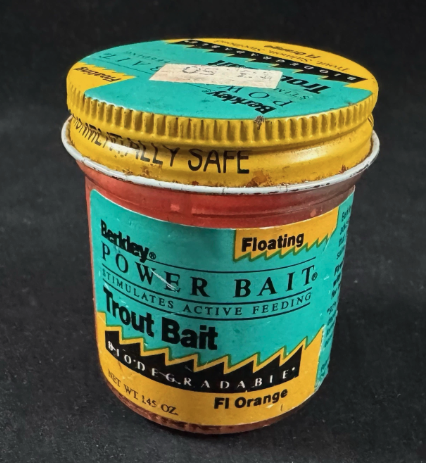
Even after that test, there was some skepticism among the angling community. Still, when “15 to 20 cases” of PowerBait was sent to shops in the June Lake area, it quickly sold out, and in some cases at $15 per jar. Within a year of that, it was sweeping the country, and by 1990 PowerBait had gone full-speed on a nationwide level.
Of course, there were already floating trout baits on the market prior to PowerBait’s arrival, and Berkley already had products called Berkley Strike which included a “moldable attractant” that anglers were already using at some level as a standalone trout bait. That made developing a moldable, jarred dough bait and diving into that market a no-brainer in Berkley camp.
Initial lab testing consisted largely of determining what scents (natural, chemical or otherwise) trout like and don’t like, taking it down to a molecular level and zeroing in on the ideal mix of those components. For example, Berkley analyzed chemical compounds in prey such as baitfish and worms before moving on to formulate a synthetic blend of those chemicals. Then came testing in the Berkley Lab with live fish to identify what they like and adjusting the chemical mix accordingly.
As one might imagine, the recipe is as secret as the one for Coca Cola. The components are coded so they can’t be unveiled via some “leak,” and PowerBait is virtually impossible to reverse engineer. While over the years, different varieties have been introduced (Turbo Dough, Natural Scent, Extra Scent, Twist, etc.), the formula for the original PowerBait remains unchanged.
A chemist by trade, Prochnow said he believes color doesn’t matter a whole lot to trout. His go-to is rainbow because “fish see contrast very well” and said the best-selling color is chartreuse.
For more information, visit Berkley-Fishing.com