



BY DAVE HURLEY
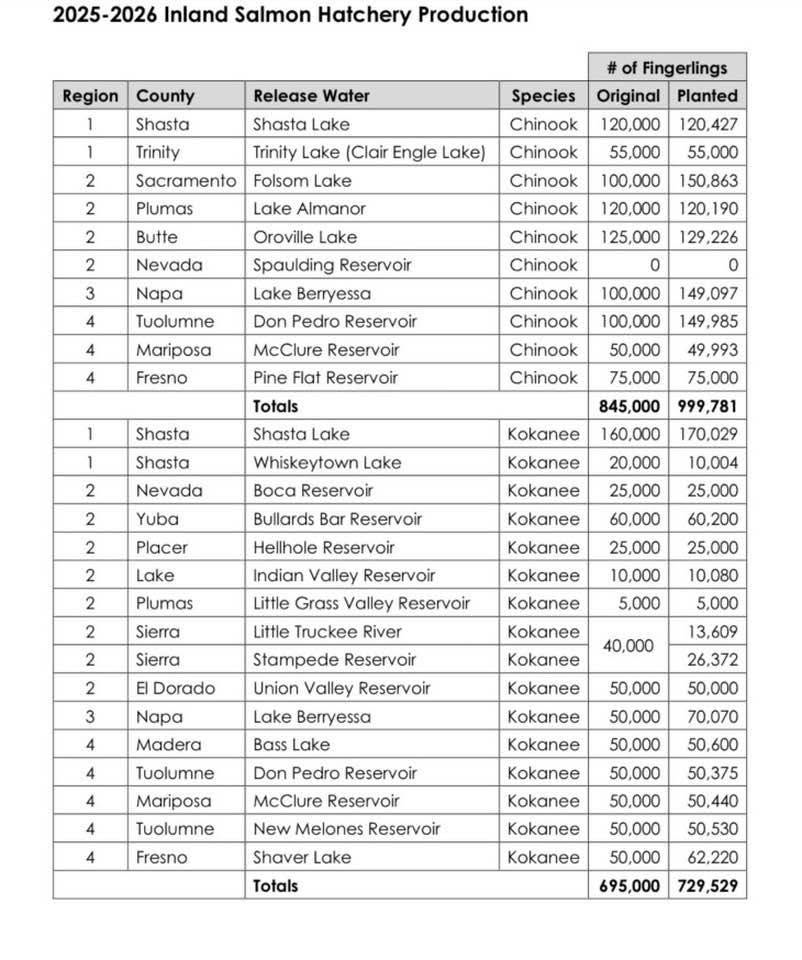
SACRAMENTO – The California Department of Fish and Wildlife released the numbers for the 2026 inland king salmon and kokanee plants, and in many cases, the plants exceeded anticipated numbers. 2025 was a challenging period for inland king salmon releases due to the presence of Infectious Hematopoietic Necrosis virus (IHN) in three of the four batches of eggs collected at the Feather River Hatchery. The virus resulted in only four reservoirs without downstream hatcheries being planted. This year, king salmon plants are back on for ten reservoirs ranging from Lake Shasta in the north to Pine Flat in the southern Sierra Nevada. Kokanee are to be planted in sixteen reservoirs including Union Valley and Shaver Lake which were left out in 2023 due to a shortage of eggs. This is great news for local economies dependent upon the scores of trollers who arrive at the lake for target these introduced species.
The plants will also offer a variety of options for kokanee anglers as lakes such as Shasta, Whiskeytown, Berryessa, New Melones, Don Pedro, and Shaver have the potential for trophy-sized fish over 18 inches which others such as Stampede and Bullard’s Bar will produce unlimited numbers of smaller fish. Some bodies of water such as Lake Tahoe will not be planted due to the attempt to reestablish the native Lahontan cutthroat trout will others such the population in Lake Pardee experiences a prolific natural spawn.
Inland king salmon are also a major target for trollers with Shasta, Oroville, Folsom, Berryessa, and Don Pedro having the potential for kings over 10 pounds. When the big fish are present, trollers will come from near and far to seek a personal best. To get to trophy size, anglers have been requested to gently release the smaller kings to allow them to grow into third-year status. The Department of Fish and Wildlife will modify allocation numbers based upon biology and angler feedback. Shasta received extra salmon and kokanee due to increased popularity and to aid in the establishment of a. self-sustaining population. Berryessa received extra fish as the Bay Delta region’s largest and well-visited reservoir. Folsom received a larger allotment of kings due to high angler usage in an urban area. Don Pedro received an extra allotment of kings as it produces the Central Region’s best quality inland Chinook salmon. Shaver received an increased plant to alleviate uncertainty about future year class strength resulting from the lack of a 2023 plant. Bass Lake remains a concern after successive releases of 50,000 kokanee, the adults have been absent since the lake was lowered for dam reconstruction.
Angler involvement is important in determining the releases, and the improvement in the department’s efforts is a result of organizations such as the California Inland Fisheries Foundation and Kokanee Power who have worked for years to improve conditions for these species.
