



BY JIM NEIMEIC
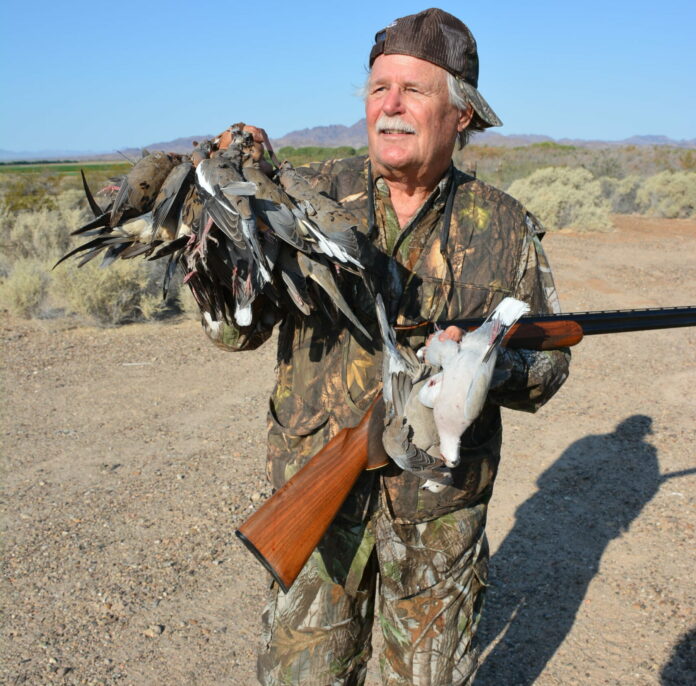
NILAND – It would be safe to report that the upcoming dove season will at least be as good as last season’s long opening weekend. With a mid-week opener for this coming dove season, there is likely to be less hunting pressure, which could produce better shooting and harvesting of dove through the remainder of week.
The weather pattern has been kind of iffy, some thundershowers have hit the high desert, minimal monsoonal rain in the southwest and Yuma has thus far only received minimal summer rain. The lack of winds also could help in keeping both mourning and white wing dove holding in traditional good hunting spots throughout the entire Imperial Valley. The southern end of the San Joaquin Valley is hosting a pretty good hatch of mourning dove and hunters report good numbers of dove around fallow almond orchids and farm/ranch ponds.
Western Outdoor News checked in with Cris Crecelius, Habitat Supervisor II, for Wister and the nearby Farm Fields of Calipatria.
“Conditions are looking just fine for a good dove opener, as our staff reports about average numbers of both mourning dove and white wing dove in this part of Imperial Valley. So far, the monsoonal activity has been pretty mild and both species of dove are sticking around grain fields and stands of sunflowers. The Farm Fields should produce good dove hunting as these prime upland game bird fields are looking great and full of grain,” said Crecelius.

Moving up a little to the northwest, the San Jacinto Wildlife Area appears to be ready for opening day. According to Carlos Gutierrez, Wildlife Supervisor for the state refuge, hunting fields are supporting lots of native grain crops. This refuge shoots mostly mourning dove, but there usually a few white-wing dove harvested by hunters. There appears to be ample fresh water available across the refuge and some pretty good roosting trees nearby. The waterfowl ponds and upland game bird fields will be open to the hunting public from September 1-7, but access to waterfowl ponds will end on September 7. The upland game bird fields will remain open though the end of the first half of the dove season (Sept.15).
The high desert region of Victorville, Barstow and Lucerne Valley will likely offer up mixed dove hunting, as the birds are pretty well spread out now that thunder showers have been hammering isolated areas of the Mojave Desert. Dove hunters, who are hopeful of harvesting a game strap of desert dove, should spend some time scouting looking for established flyways and water sources.
One of the top dove hunting spots in the southwest is Yuma. WON checked in with Richard Spraque, owner of Spraque’s Sports in Yuma, AZ, 928-726-0022, for a current status report.
“White wing numbers look stronger than normal around the Yuma area. Some of my staff live in nearby agricultural areas and the population of white wings is standing out. Habitat/Access afield are similar to last year mostly, but there appears to be a little more hunting opportunities. With the Tuesday opener, it should mean fewer hunters so less crowding on better fields should be possible. At this point, we anticipate a very solid opener. Hunters should access yumadovehunting.com to find out more about hunting that state.
WON then went on to contact Larisa Harding, Wildlife Biologist for the Arizona Game and Fish Department.
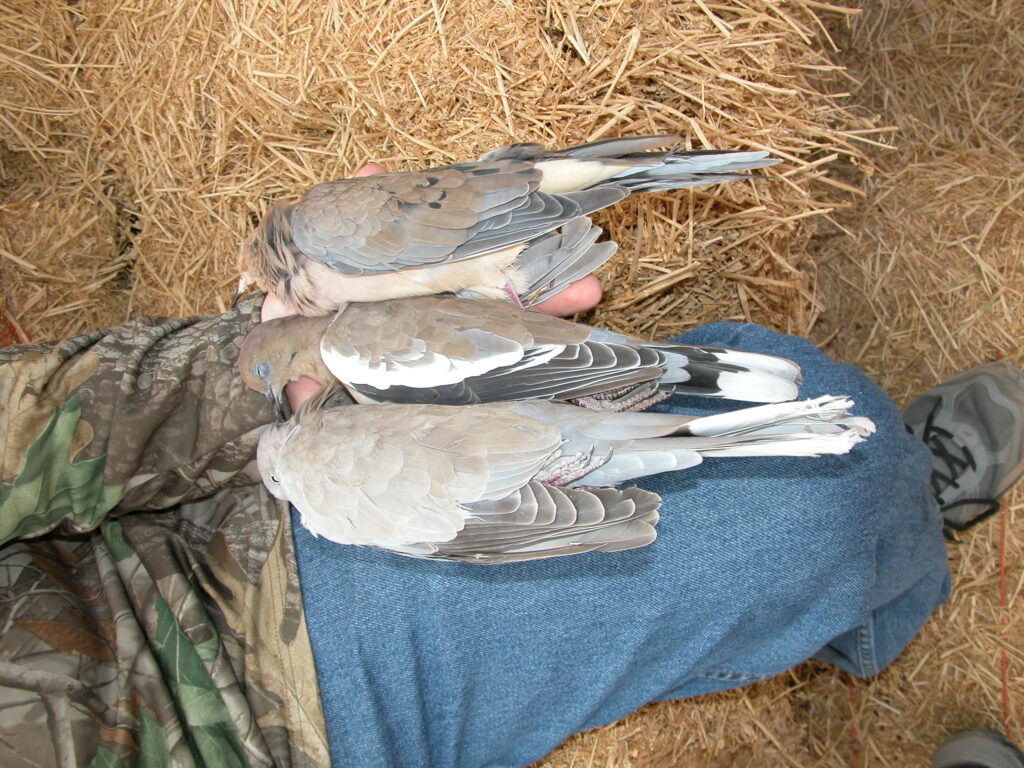
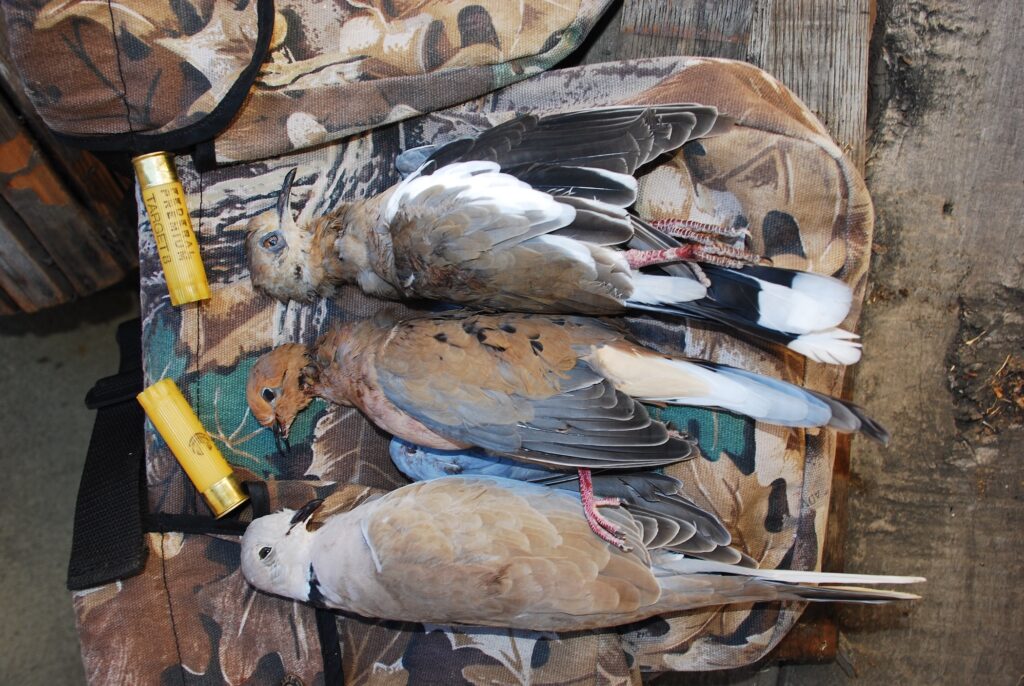
“As for dove, we expect an average year for mourning dove and perhaps an above average year for white wings. From what we’ve seen thus far, white winged dove appear to be in higher numbers than mourning dove across the state”, said Harding.
Harding then went on to add, “We are not seeing lots of young birds on the ground (in our banding efforts) yet, but expect that their numbers will increase over the next 4 weeks. That should be true for both species, though white wings appear to be a little ahead of mourning dove in numbers and reproduction thus far. Hunters should expect hot spots to be near water sources, ag fields, and along the dry river courses where dove can find food and roost sources. Typical hot spots for hunting dove statewide include; Yuma and the surrounding areas, Marana area, and Buckeye (near Phoenix). I would think that the early dove season should provide lots of opportunity, as long as we don’t get some large monsoon storms just prior to opening day and push dove out the area.”
WON is staying in contact with Steve Turigliatto of San Diego, who has been checking out dove populations for Imperial Valley, San Diego County and My Country Club ranch properties around Mesa Grande.
“I have been out to the Imperial Valley a couple to times recently and have seen excellent number of mourning dove, along with white wing and Eurasian collared dove in the mix. It rained pretty hard in our local mountains and spots in the desert during that last monsoonal weather front that moved through. Currently, MCC hunting ranches are showing just marginal populations of mourning dove, but it also appears that some dove are still setting on nests,” said Turigliatto.
