



BY JIM NIEMIEC
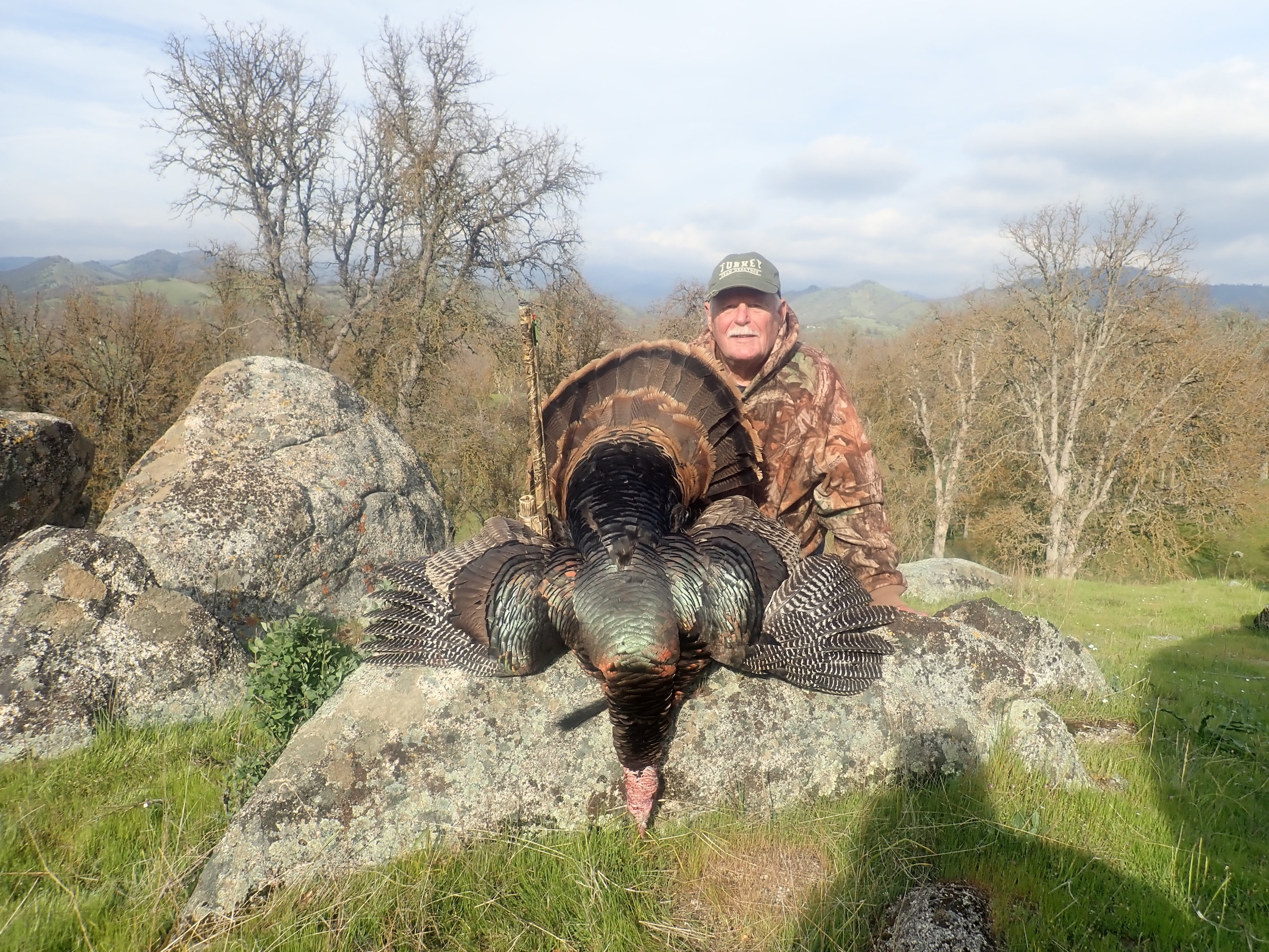
ATASCADERO – With a strong opener of the 2026 spring turkey season now under belt, gobbler hunters are going to have to work a little harder to harvest a big gobbler. Those young 2-year-old toms that came into a decoy over opening week were likely harvested or at least they have learned a little bit about staying away from a decoy set-up, avoiding a slate call, box, mouth calls or hanging up just out of shotgun range.
Last week’s storm likely won’t affect turkey hunting, now with warmer weather on tap, hens will be in full dispersal once they hit the ground. Toms and hens coming off a roost are huntable usually for the first 30 minutes of the early morning hunt, as they seem to stick together for a while. They, more than likely, move off to a more open field before heading for thicker cover of live oaks and dry washes where they will spend most of the day. Try to pattern a small flock of turkeys once they leave the roost and set up in an ambush spot along the route the birds have taken on previous days. Being able to predict where turkeys are heading, and on which side of a ridge or draw they use, can make all the difference in the success of a hunt.
Gobblers will stick with hens until mid-morning in hopes of late breeding and should be easily spotted on open hillsides in full strut. While a tom is still with hens, it’s extremely difficult to get that gobbler to break away and move within shotgun range. Over the years this scenario has played out many times for this turkey hunter and I have found the best way to get that gobbler to come within effective shotgun range is to get the attention of the boss hen.

Yelps. purrs and cuts can often get the boss hen mad enough that she will seek out another hen that is trying to move into her flock of jennies, young jakes and at least one or two gobblers. Once on the move that hen (and company) will slowly work closer, seemingly hanging up along the way. A hunter has to be extremely patient in allowing enough time for birds, and hopefully a mature gobbler, to come into shotgun range.
Veteran turkey hunter, Andy McCormick, is also President of Legacy Sports International (HOWA), offered up the following tips on what one might expect during the second half of the spring season.
- Know the terrain you are hunting and scout from afar with binos and locate current roosts.
- Confirm there are gobblers in the area, looking for tracks, strut areas or water sources.
- Pressured late season gobblers can become very wary, so soft yelps and purrs are ideal.
- Have more patience! Be willing to sit still for hours.
- Be alert for toms that will come in silent.
- Try to locate a lone tom between 10 am and 2 pm, if you do, you have a good shot at bringing him into range.
- Don’t be scarred to call in an aggressive hen.
- Hen decoys attract adult hens, as well in the late season. A hen in your decoys increases your odds…keep her around.
- Know where the birds want to be…roosting, feeding. Watering, strutting, etc.
WON also checked in with master turkey guide Chad Wiebe, outfitter for Oak Stone Outfitters, (805) 472-2200.
“During the late season, once you get a tom to respond to your call, no matter how far off he seems to be, don’t call again at him until he gets to you! A tom will be able to pinpoint your location in that first interaction. The more he gobbles on the way in, the more time there is for another dominant hen in the area to head him off or for him to get hung up. But, every time he gobbles, he stops moving and will likely start to strut, thinking the hen(you) is coming towards him. Late season toms will cover greater distances, so your chances will improve even in spots that have been dead all season,” said Weibe.
(Editor’s note: “An interesting phenomenon here in California is that new turkey hunters are mostly converted deer hunters who saw a turkey during a hunt. These hunters are mostly “spot and stalk” guys and don’t plan on spending much time in a blind. They will go back to where they saw turkeys during deer season, but by spring time, flocks of turkey have already dispersed, thus frustrating a hunter by midday and they are out of the field. By mid-season, and on through the remainder of the season, hunters using “cut and run” techniques often are too frustrated to go out and spend time in turkey country. A turkey hunter would be better off starting their individual quest for a turkey close to the second peak and hunt closer to noon than prior to sunrise.
The second peak is usually two weeks (or more) into the season. From a hunter’s point of view, it is much nicer not to have to deal with opening day crowds and have midday gobbling going on during the second peak, which may be three or four times more than the amount of gobbling during the first peak of gobbling.)