



Record snowpack and coordinated efforts create ideal habitat conditions for waterfowl
DUCKS.org
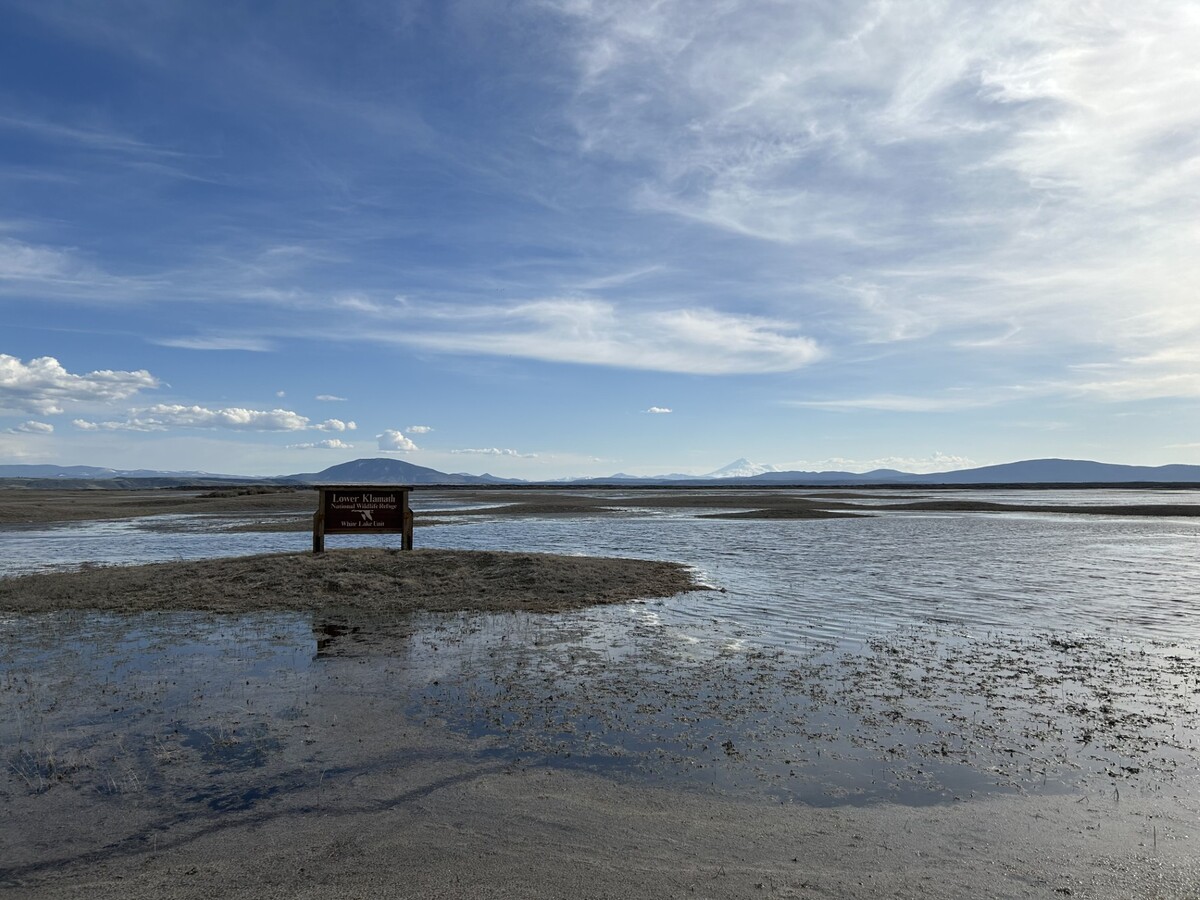
KLAMATH— After a winter of record-breaking snowfall, the Klamath Basin warmed up, and the long-awaited snowmelt surged through the landscape. That runoff is bringing life back to one of the West’s most vital wetland ecosystems: the Lower Klamath and Tule Lake National Wildlife Refuges.
At Lower Klamath National Wildlife Refuge, more than 23,000 acres are now fully flooded, —an extraordinary rebound for a refuge that was nearly completely dry just two years ago. An additional 14,000 acres are actively being filled with water, while about 11,000 acres remain dry.
This resurgence of water puts the refuge close to levels last seen in 2008, which is the last time it was near full capacity.
A short distance away, the Tule Lake National Wildlife Refuge is also flush with water. Both of its large wetlands are filled to their combined 12,000-acre capacity. Since Christmas Eve, D-Plant has pumped about 33,000 acre-feet of water from Tule Lake to Lower Klamath through Sheepy Ridge, made possible by the efforts of the Tulelake Irrigation District. And while this year may fall short of the 50,000 acre-feet pumped in 2008, it’s no less amazing. This lifeblood source of water is revitalizing a habitat that had been idle for years.
Beyond the refuges, more than 30,000 acres of privately owned agricultural fields in the Klamath Drainage and Tulelake Irrigation Districts have been intentionally flooded by local farmers. These fields are providing vital staging and foraging ground for millions of migrating waterfowl in the Pacific Flyway.
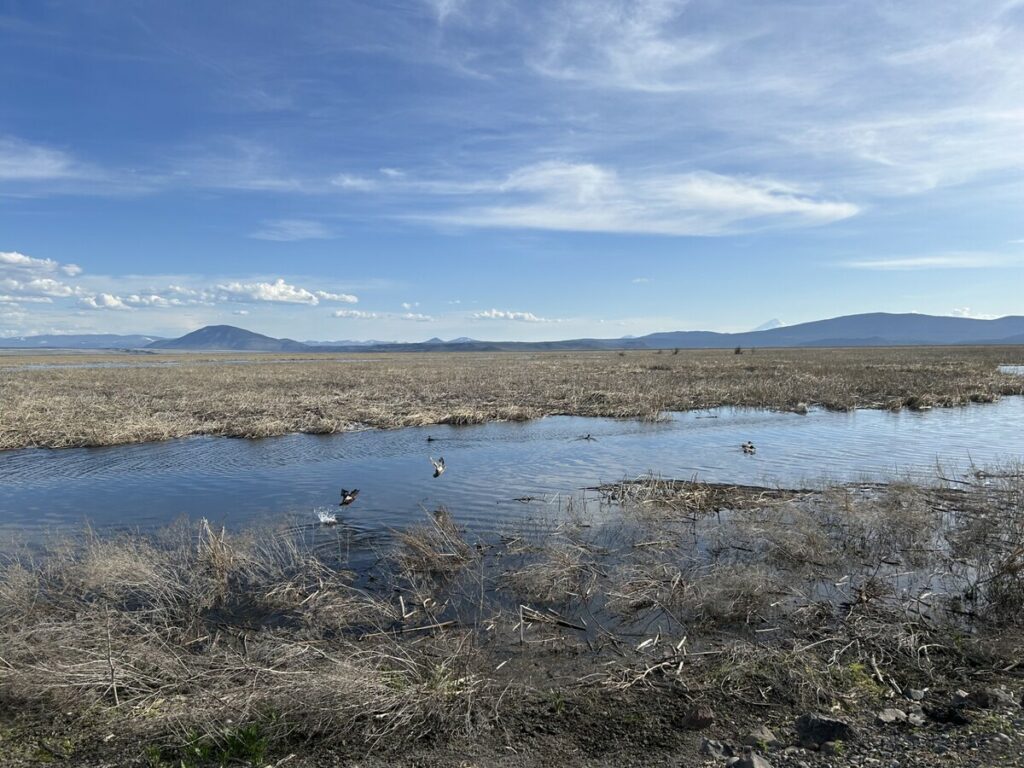
“This is a fantastic water year for Lower Klamath and Tule Lake Refuges,” said John Vradenburg, supervisory biologist for the refuges. “Where else in the Intermountain West can you find over 80,000 acres of contiguous wetlands and habitat? That’s the Klamath Basin, and it’s why this landscape is so critical to the Pacific Flyway.”
Each spring, the Klamath Basin serves as a critical launching point for the northern migration of waterfowl headed to breeding ground in northern Canada and western Alaska. In February, Vradenburg estimated that one million ducks, including 500,000 pintails, stopped in Lower Klamath alone. Those numbers remain high, though now many ducks have departed, making way for waves of geese arriving from California’s Central Valley.
“Food is everything for waterfowl in the spring,” said Jeff McCreary, director of operations for DU’s Western Region. “What they eat in the Central Valley’s wetlands and rice fields, and now here in Klamath, fuels epic flights. Our pintails are on their way now, making a 2,000-mile non-stop flight over the Pacific Ocean to western Alaska’s Yukon Delta National Wildlife Refuge. That’s over 1.2 million wing beats. Amazing!”
The importance of a well-flooded Klamath Basin doesn’t stop at migration. Last year’s unexpected water brought a welcome resurgence in local waterfowl production, and this year, with even more water and improved habitat conditions, the outlook is even better. Lush wetlands filled with cover and forage promise strong breeding and brooding conditions for waterfowl and other species.
This important comeback has only been possible thanks to the coordinated efforts of the U.S. Fish and Wildlife Service, the Bureau of Reclamation, and local water districts, all working together to make this habitat revival a reality.
This year’s water shows what’s possible when the Klamath Basin receives the resources it needs, benefiting the waterfowl that depend on it and the communities rooted here.
