



BY MERIT McCREA
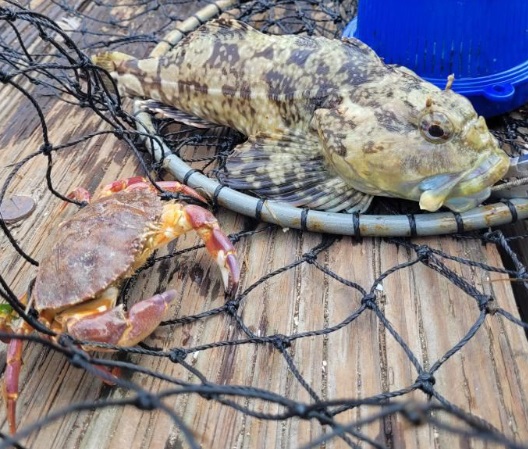
SACRAMENTO – This year’s rockfish seasons will be almost exactly the same as last year. New is just the repeal of the minimum length limits on greenling, California scorpionfish AKA sculpin and cabezon, along with the minimum length limit for sculpin fillet length. What this means is now both cabezon and greenling are added to the list of fish that can be filleted at sea. There are new skin-tab rules for these fish and also lingcod. The entire skin of the fillet must remain naturally attached at one end to the fillet.
These actions all started with input from fishers at the Pacific Fishery Management Council where scientists with the Science and Statistical Committee provided the numbers and fisheries representatives along with the help of analysts with the the Groundfish Management Team alongside the bounds set by the Enforcement Consultants (EC) divined the best way they could to provide the most public access within the limitations. All that went on in 2023 and resulted in 2024 Federal regulations which were then adopted for state waters as well by the California Fish and Game Commission.
Key species limiting access at this time are vermilion rockfish, copper rockfish, and up north, especially quillback rockfish. Yelloweye and cowcod continue to be a concern but didn’t end up bending the options the way those others did.

The goal was to keep catches below total tonnages on those limiting species while allowing as much access as possible to others. CDFW staff were key in helping anglers make the most of their options, but as you now know the resulting seasons were complex.
This writer’s best guess is the simple regs. option up north would have been like completely closing the waters between 20 fathoms and 50 fathoms with just 3 months or so open in the rest. Down south my guess is the simple result would have likely resulted in a simple 4- or maybe 5-month open season. Instead 9 months of fishing and many more pounds of other rockfish species were accessed for recreational anglers.
The lifting of the size limits was equally facilitated by the work of CDFW staff. Anglers and charter crews asked to be able to fillet greenling and cabezon at sea, rather than to continue to be compelled to wait until getting shore-side to fillet those.
The analysts went to work and discovered through some numbers crunching that the recreational fishery could stay below the total allowable catch limits on greenling, cabezon and sculpin even without a minimum size limit. Once without that, there would be no reason to prevent them from being filleted at sea.
After some input from the EC regarding what they needed to tell these species apart from others like lings as fillets the final recommendation was full skins attached.
This change was moved forward for 2025 along side keeping the same seasons and bag limits etc. as 2024. By early next year Council advisory bodies will be beginning to consider what, if any changes could help maintain conservation goals and support public access to fishing in 2026 and 2027. Informing this effort will be the results of new full stock assessments on chilipepper and quillback rockfish.