



BY BILL SCHAEFER
LAKESIDE, SAN DIEGO COUNTY – San Vicente Reservoir, located in San Diego’s East County, is one of the San Diego City Lakes’ gems. It was already one of the largest lakes in San Diego County, but the growing need for water in southern California had the City making plans to increase the size of the lake and more than double its capacity.
The lake was built originally in 1943, but the City knew that the area’s need for water would increase over the years and the lake would have to be made larger. So, certain of this need, it was designed into the lake’s original dam’s architectural design to be able to increase the dam height in the future.
When it first opened, San V held about 90,000 acre feet of water, but as the need grew for more water and the southern California drought continued, plans were made to finally increase the height of the dam. After studies and engineering the plan, it was decided to raise the dam by 117 feet of the possible 120 feet our forefathers planned it could handle.

With the increase in height, the lake grew to more than twice its original size. The project added a possible 152,000 more water acre feet of storage to the lake when full capacity. This project was one of the largest dam projects, as far as raising the height of a dam, in the county.
The lake closed in 2008 and the work began on what was supposed to be a multi-year-long project. For years fishermen speculated on how fishing would be when the lake opened and if they would even still be around to fish it. Rumors spread from the handful of poachers sneaking into the lake that it was out-of-this-world fishing.
Then in 2016 rumors started circulating again that this was going to finally be the year the lake reopened. After a few months of rumors, the word came that it was indeed going to open on Thursday, September 22, 2016. A few days before the actual lake opening, the San Diego Mayor cut the ribbon at a small ceremony, and the lake was officially open for business.
So, would the giants show up? How would the fishing be? Opening Day and weekend, Thursday through Monday, as the lake sold out in 5 or 6 minutes with a limit of approximately 150 boats on the water each day. Originally, you had to purchase your permit to launch and fish from Ticketmaster, but as the opening week’s crowds subsided, the City took the reins back on the permit sales and they are now available at the lake each open day.
For more information on all the current rules and regulations at San Vicente please take a look at their informative website at SanDiego.gov/reservoirs-lakes/sanvicente-reservoir
Well, how was the fishing? It was indeed out of this world. You could almost throw a bare hook at the water and catch something. Anglers on the very first day talked of 100 to 200 fish days for a couple of guys in a boat. Wide open topwater in the morning, to a later bite on almost anything in their tackle boxes was the norm. And, it was almost at every location on this lake.
You have to remember that this was a new lake. At least in the sense that after the water rose you now have all new shorelines, points, islands, and coves. It may look similar, but it is not. It will take some adapting to, but remember, exploring is fun, especially when fishing.
But, all the noise of 150 boats each day did eventually push the bass out into deeper water. The second day and the following days after the opener found fishermen having to fish in 30 to 100 feet of water. There was still some topwater action in the morning, but soon after sunrise, the fish returned to the depths.
It takes a little technique to fish deep, but if you pick a main lake point to fish, throwing out into 100 foot of water and work uphill, you would find fish. There are a lot of new underwater humps and rock piles to fish as well. The other interesting thing is that the shoreline brush in the lake now goes out into 80 to 100 feet of water.
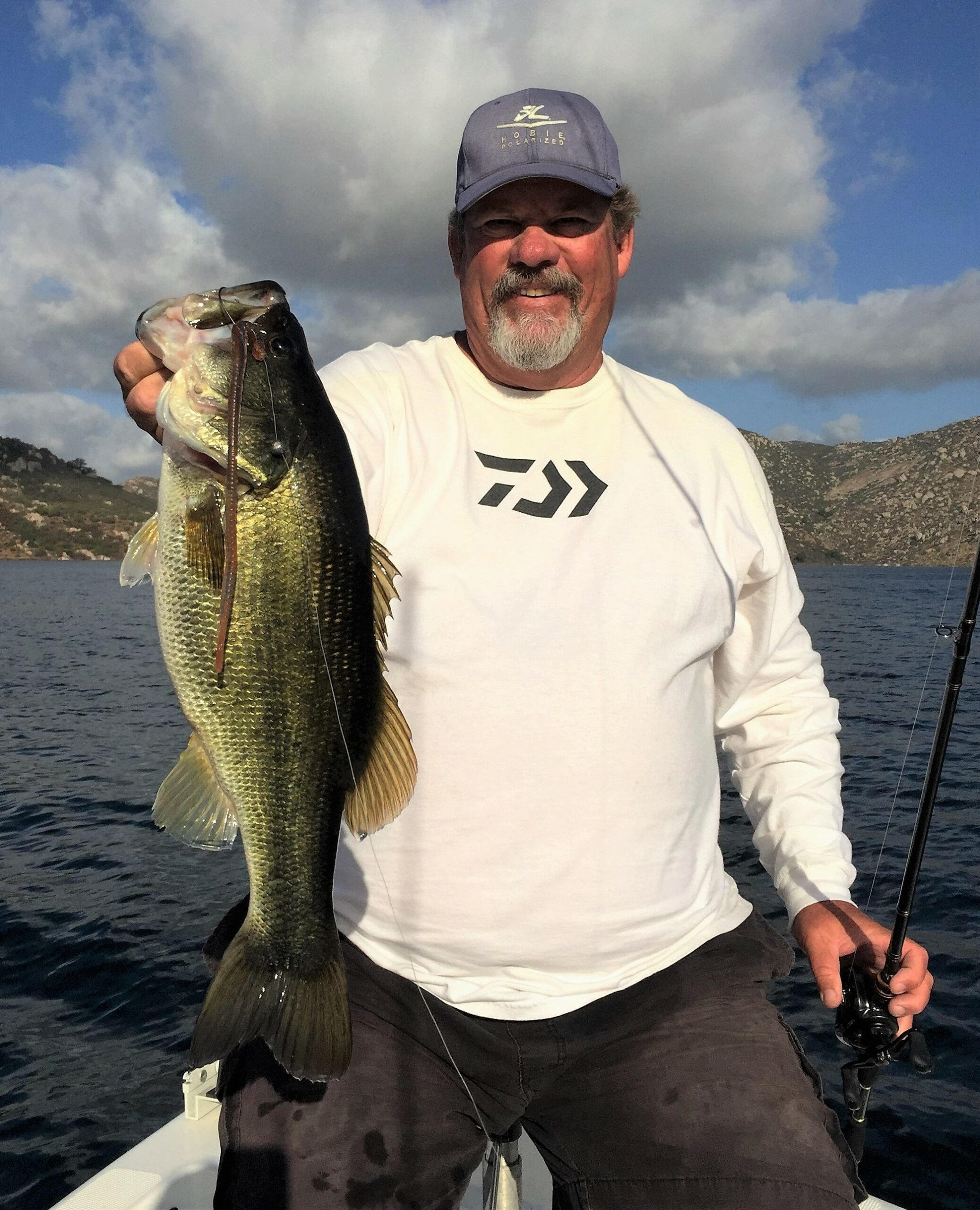
Fast forward to now and the fishing has still been great. Even though the numbers have subsided closer to normal, this lake still puts out way more fish than any other lake in the area. And, you can catch a lot of numbers in the 2-pound range, but also in the 4- to 6-pound range.
The fish here eat everything, and while they were scared off into deeper water when the lake opened, they have now been through several spawns where they were naturally drawn into shallower water, even with all the boat noise. They seem to be in a more regular state as far as depth, say 3 to 30 feet of water.
Now that the bass have been through the spawn, Post-spawn brings back roaming wolf packs of bass, similar to when the lake first opened. There may be some morning topwater action, or at the very least, jerkbait action. Baby bass and bluegill colors may be extra good as some of the bass are still protecting fry and will attack anything that threatens their spawn.
If you see a ball of fry along the shore, the bass protecting it may not be in plain sight, but work your jerkbait all around and through it. Also remember all that brush in the water that runs out to close to 80 to 100 feet of water. The bass use it as a natural highway around the lake, darting out to feed when they spot unsuspecting prey.
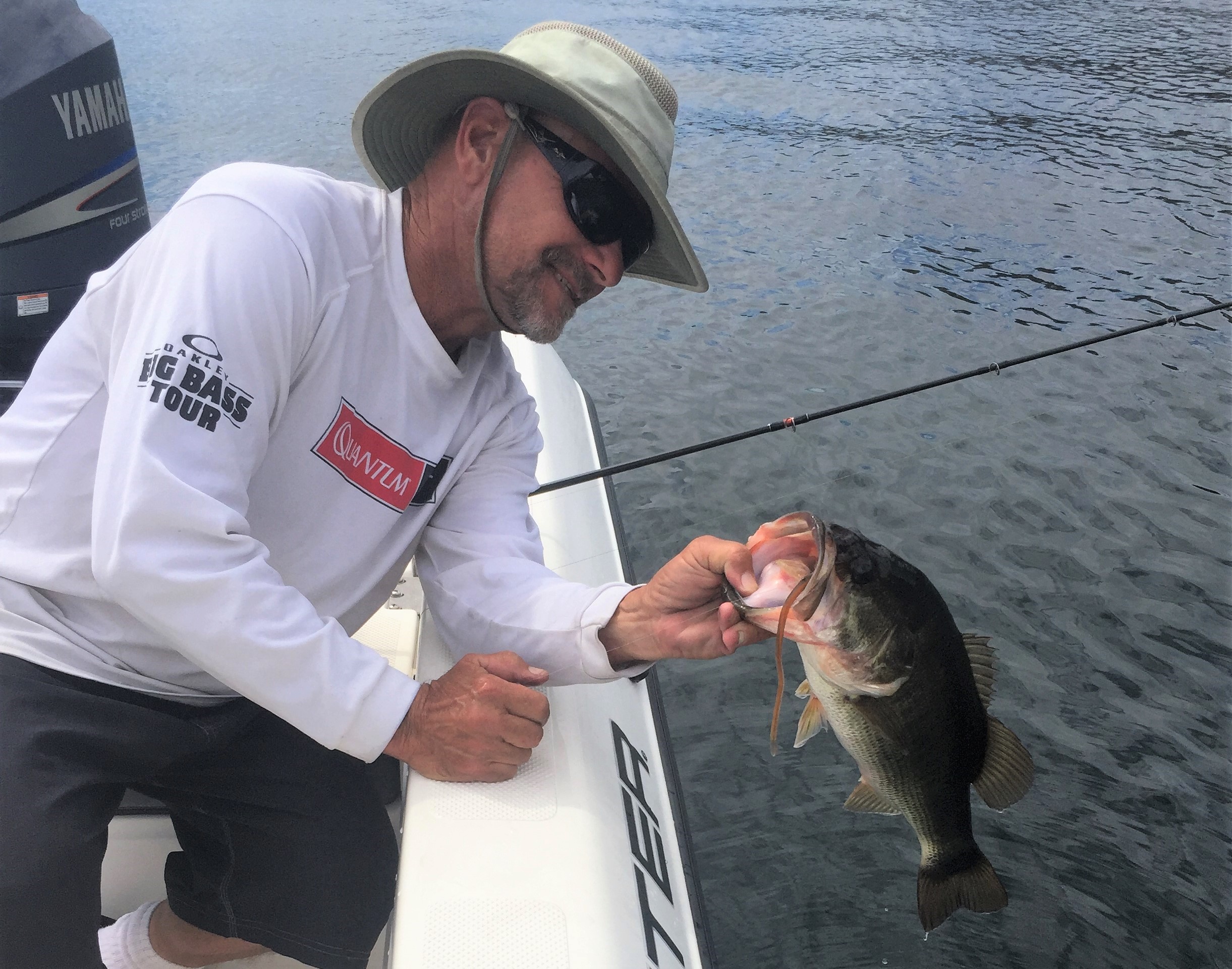
Plastics are always a good weapon for fishing underwater brush. The lightest sinker or weight you can get away with will help you pull through all those sticks. You should also peg your sinker if you are Texas rigging worms as I was opening weekend. Dead-sticking larger hand-poured 8- to 10-inch worms or Senkos was the hot bait when the lake first opened and should also do well as they have always been a good bet here.
Let the bait sit as long as you can stand it, move the bait an inch and let it sit again. So many times you would go to move the worm that next inch and the bass would already be on. It almost felt like you were caught in the leaves on all those deep bushes instead of a fish. A mushy feeling on the end of your line, then a hard tug, and half the time you would miss them. You can’t hesitate because more times than not it was a bass.
Morning fishing, as I mentioned, should include topwater and should continue, to some extent, through the Fall. Both poppers, like the classic Pop-R, or walking baits, like a Zara Spook, should do well like last year. Whopper Ploppers or Buzzbaits will call those bass out of the bushes when run over shallow brush. There should even be some frog action.
Soft and hard jerkbaits, as I mentioned, should do well in the morning or along mudlines caused by the afternoon wind. Middle of the day, the deeper the better, as jigs, worms, and creature baits did very well and the size of the bass should be of the larger variety.
Most of the fish are healthy 1.5- to 2-pound fish with a lot of 3 to 6 pounders mixed in. Some bass look very healthy and a few look a bit skinny. As I mentioned, bass and bluegill patterns should be hot as we have had several bass throw-up baby bass and bluegill they had eaten.
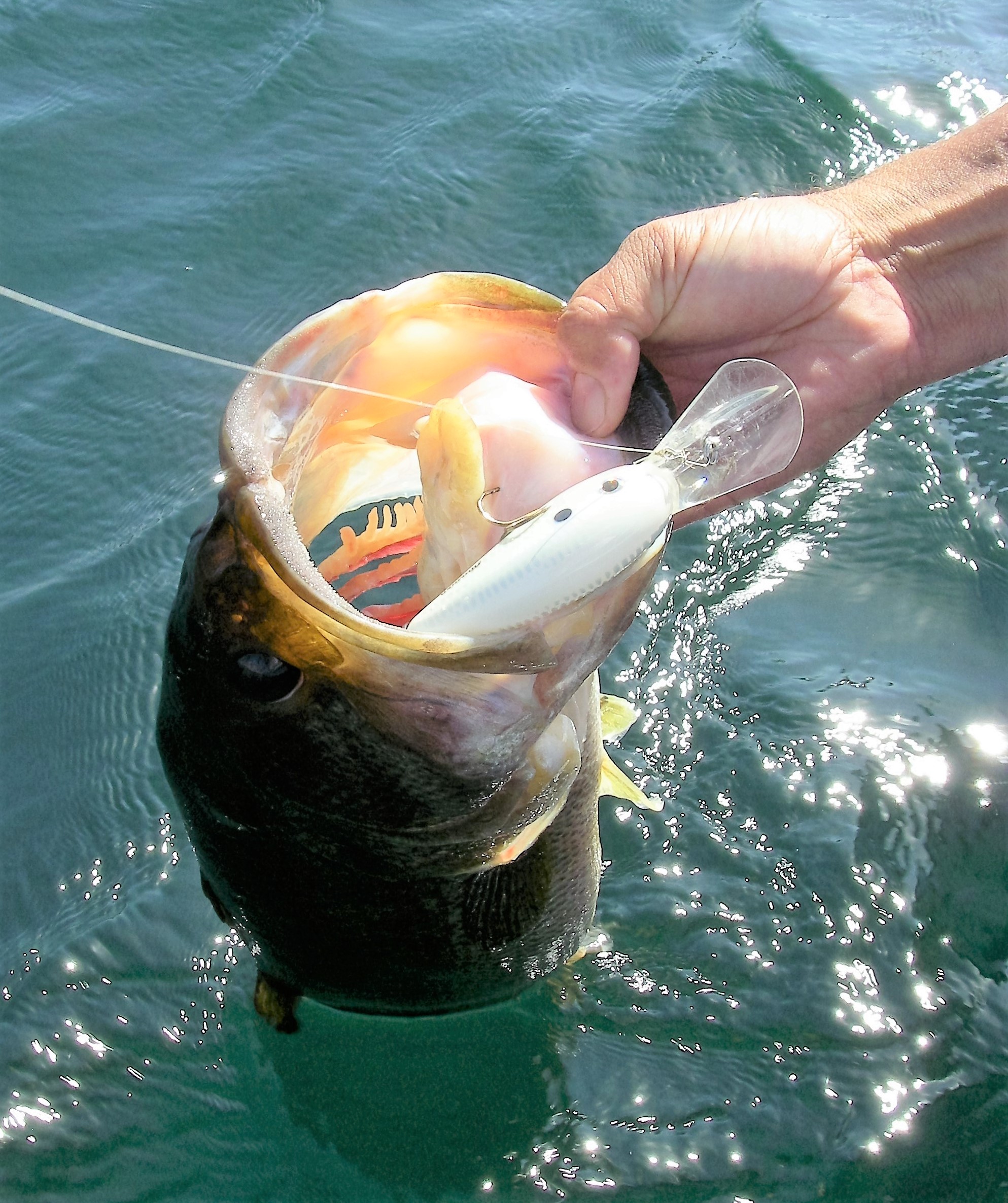
Crawdad patterns also do well at this lake in reds, purples, and blues, the color of the ‘dads here. Cranking has always been a good bet at San Vicente and my favorite is an all-white crankbait. Just remember your retriever as there is all that brush below. But, if you can just tick it, you will score. I have even had a few bass eat my hung-up crank off brush at this lake in the past.
As I mentioned the lake is a new collection of coves, shoreline and structure. Explore the lake and find new areas. You can also fish the higher-level areas of old hot spots, but they are now 80 to 100 feet underwater. Sometimes the bass just slide to the new shore.
Fishing is now several months old and the 100 fish days have subsided to about 10 to 20 fish days, but you can’t get action like that at any other lake in southern California. It is a lake that takes a bit to figure out now that it has gone through a change. Some will do good here and some not so good; skill will prevail at this impoundment for a while. But, one thing for sure, this lake is one of the top fisheries in southern California!
